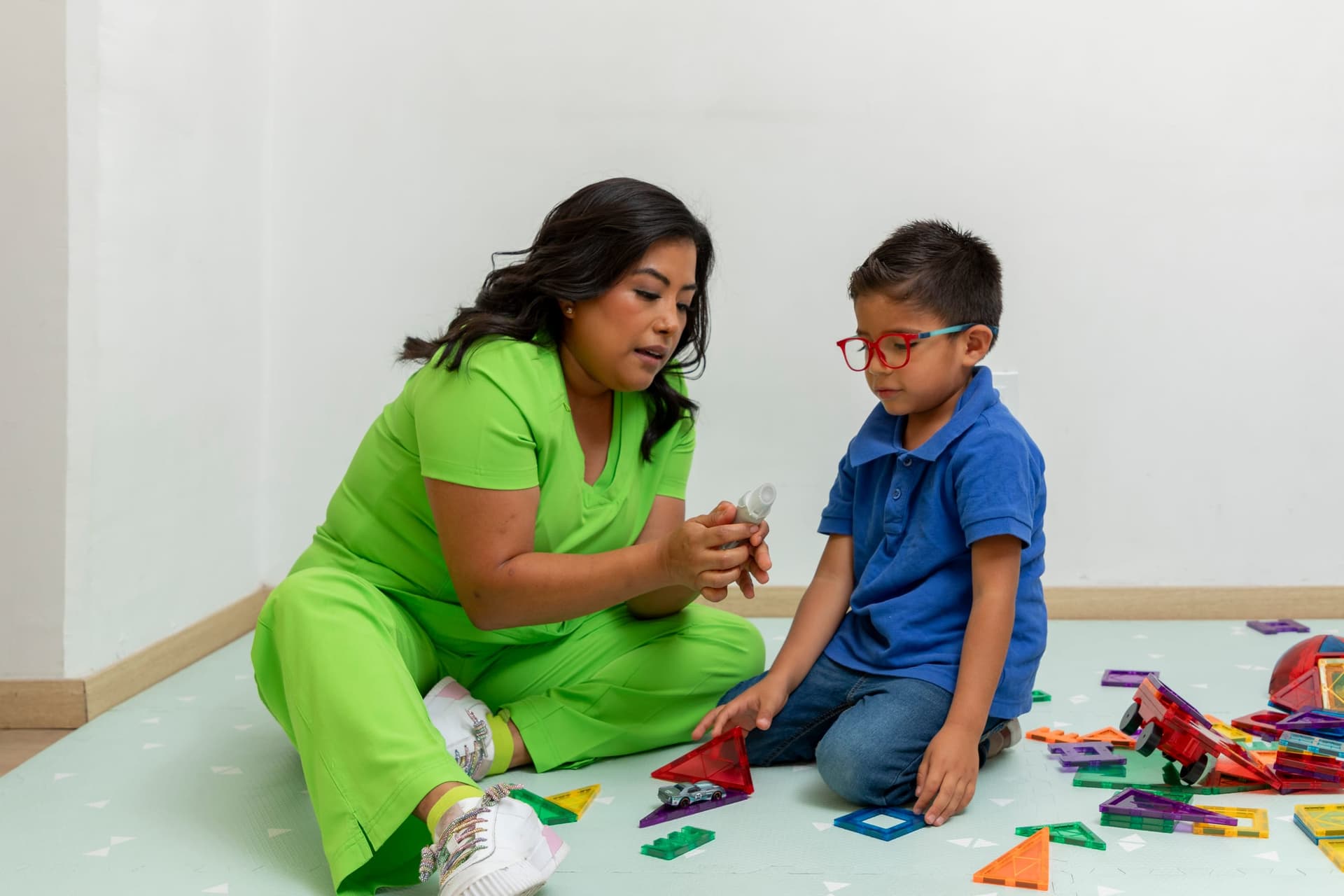
When a child receives a diagnosis of autism spectrum disorder, ADHD, Down syndrome, cerebral palsy, or another developmental condition, families are often left with a critical and urgent question: what kind of professional support actually moves the needle? Medication management, speech therapy, and occupational therapy all play important roles, but for behavioral challenges and skill acquisition, behavior analysis consulting is frequently the most direct and evidence-based path forward.
Behavior analysis consulting is not a single service. It is a clinical framework delivered by Board Certified Behavior Analysts (BCBAs) who assess the child's current functioning, identify barriers to learning and participation, design individualized intervention plans, and guide families and educators in implementing those plans consistently across every environment where the child spends time.
Spectrum Analytics provides BCBA-led behavior analysis consulting services in Miami, Florida, working with children across a wide range of developmental diagnoses. This article explains what these services involve, which children benefit most, and how to evaluate whether a consulting arrangement is the right fit for your family.
What are behavior analysis consulting services?
Behavior analysis consulting refers to professional services delivered by a BCBA: a clinician with a graduate-level education in applied behavior analysis and a national certification from the Behavior Analyst Certification Board (BACB). The BCBA does not simply show up and work with a child for a few hours per week. Their role is to function as the clinical architect of an intervention plan that can be carried out consistently by parents, teachers, therapists, and paraprofessionals around the clock.
The consulting process typically begins with a comprehensive behavior assessment. The BCBA observes the child in natural settings, interviews caregivers and teachers, reviews any existing evaluations, and administers standardized tools to measure the child's current skill levels across domains including language, social behavior, adaptive living skills, and academic readiness. This assessment identifies not only what the child cannot yet do, but why: specifically, what environmental variables are reinforcing challenging behaviors or blocking skill acquisition.
From the assessment, the BCBA develops a written behavior intervention plan and skills curriculum. These documents specify target behaviors, intervention procedures, data collection methods, and criteria for measuring progress. The BCBA then trains the adults in the child's life to implement the plan with fidelity, monitors outcomes through ongoing data review, and adjusts the intervention when the data indicates a need for change.
Which developmental disorders benefit from ABA consulting?
Applied behavior analysis is most widely recognized as the evidence-based treatment for autism spectrum disorder (ASD), and the research support for ABA with autism is the strongest in the field. However, the principles of behavior analysis are not diagnosis-specific. They apply wherever learning and behavior are the focus: which means they are relevant across a broad range of developmental conditions.
Children with ADHD frequently benefit from behavior consulting when medication management alone is insufficient for managing impulsivity, task avoidance, emotional dysregulation, or disruptive classroom behavior. A BCBA can assess the function of these behaviors and design antecedent and consequence strategies that reduce problem behavior and build self-regulation skills without relying solely on pharmacological intervention.
Children with Down syndrome benefit from ABA-based skill acquisition programs targeting language, daily living skills, and social interaction. The systematic, data-driven teaching methods used in ABA (including task analysis, prompt fading, and differential reinforcement) are particularly effective for learners who require explicit, structured instruction delivered across many learning opportunities.
Children with intellectual disabilities of other etiologies, developmental language disorders, cerebral palsy, and rare genetic conditions such as Fragile X syndrome, Angelman syndrome, and Prader-Willi syndrome have all been studied in the ABA literature with meaningful outcomes reported. The common thread is that wherever a child's behavior or skill development is not following a typical trajectory, a behavior analyst can bring systematic assessment and intervention to bear.
What does a behavior analysis consultant do?
The BCBA's role spans five core functions: assessment, treatment planning, training, supervision, and data-based decision-making. Understanding each function helps families know what to expect from a quality consulting relationship.
Assessment is ongoing, not one-time. While the initial evaluation establishes a baseline, a skilled BCBA continues to assess throughout treatment: probing new skill areas as the child masters existing targets, reassessing the function of behaviors that re-emerge or change in topography, and updating the clinical picture as the child develops.
Treatment planning requires the BCBA to translate assessment findings into a written plan that is individualized, measurable, and feasible for the implementation team. Vague goals like "improve communication" are replaced with operationally defined targets such as "will independently request preferred items using a three-word phrase across three different settings on eight out of ten trials for three consecutive sessions." This level of specificity is what makes ABA measurable and accountable.
Training is often the most underappreciated function of a consulting BCBA. The quality of a child's outcomes depends heavily on how consistently adults in their life implement the intervention. A BCBA who trains parents and caregivers thoroughly (using modeling, rehearsal, and performance feedback rather than just verbal instruction) significantly multiplies the number of learning opportunities available to the child every day.
Supervision of direct therapy staff (RBTs and BCaBAs) is a regulatory and ethical requirement that quality consulting agencies take seriously. The BACB mandates specific supervision ratios and documentation requirements. When evaluating a consulting provider, ask about supervision frequency, whether supervision is conducted in the actual therapy environment, and how supervisory observations are documented.
How consulting differs from direct ABA therapy
It is important to distinguish behavior analysis consulting from direct ABA therapy, because they serve different purposes and are structured differently, even though they often operate in parallel.
Direct ABA therapy involves a therapist, typically a Registered Behavior Technician (RBT), working one-on-one with the child for multiple hours per week, implementing the skill acquisition programs and behavior intervention plan developed by the supervising BCBA. This is the hands-on, session-by-session clinical work.
Behavior analysis consulting, by contrast, refers specifically to the BCBA-level services: assessment, planning, training, and supervision. Some agencies offer both direct therapy and consulting under one roof, which is the model Spectrum Analytics uses. Other arrangements involve a consulting BCBA who supports a family or school that is already providing direct services, by designing the clinical framework and training the implementation team.
For families whose children have relatively mild behavioral challenges or who primarily need guidance on skill-building strategies, a consulting-only arrangement may be sufficient. For children with more intensive behavioral needs (significant self-injury, severe aggression, or very limited communication) direct therapy with robust BCBA supervision is typically the appropriate level of care.
What to expect when you engage a behavior consulting service
The intake process typically involves an initial phone consultation where the BCBA gathers basic information about the child's diagnosis, age, current functioning, and the family's primary concerns. This call is also an opportunity for families to ask questions and assess whether the agency's approach aligns with their values.
Following intake, the BCBA schedules an in-person or telehealth assessment. The length and format of this assessment depends on the child's age, the complexity of the presenting concerns, and the instruments being used. Most initial assessments span two to four hours and may be spread across multiple sessions to avoid fatiguing the child.
After the assessment, the BCBA writes a clinical report that includes diagnostic impressions, a summary of assessment findings, recommendations for intervention intensity and format, and the initial treatment goals. This report is typically required by insurance companies to authorize ABA services, so it must meet clinical documentation standards.
Once services begin, families should expect regular caregiver training sessions: not just occasional check-ins. A consulting BCBA who is doing their job well will spend meaningful time each month working directly with the family, reviewing data, demonstrating techniques, and problem-solving obstacles to implementation. Families who participate actively in the consulting process consistently see better outcomes than those who delegate entirely to the therapy team.
How to choose the right behavior analyst for your child
The most important credential to verify is BCBA certification. You can confirm any provider's certification status, supervision history, and disciplinary record at the BACB's public certification registry at bacb.com. Do not work with anyone who claims to provide BCBA-level services without a verifiable, active BCBA or BCaBA credential.
Beyond credentials, evaluate caseload size. A BCBA managing 15 or more active cases is unlikely to provide the depth of supervision and family contact that quality consulting requires. Ask directly: how many cases does your BCBA currently supervise, and how many hours per month will they spend with my child's team?
Ask about the assessment tools the agency uses. Reputable providers use validated, norm-referenced instruments such as the VB-MAPP, ABLLS-R, or AFLS for skill assessment, and conduct formal functional behavior assessments (FBAs) for children with challenging behavior. Agencies that skip formal assessment and move straight to a generic treatment plan are not practicing at an acceptable clinical standard.
Finally, ask how the agency measures and reports outcomes. You should receive regular progress data, not just verbal updates, that shows whether your child's skills are increasing and whether challenging behaviors are decreasing. Data is not optional in ABA. It is the mechanism by which the science holds itself accountable. If an agency cannot show you data, that is a red flag regardless of how enthusiastic their staff may be.
At Spectrum Analytics, every client receives a comprehensive initial assessment, an individualized written treatment plan, ongoing caregiver training, and monthly data reviews with their supervising BCBA. Our clinical team is BCBA-led, and we maintain supervision ratios that allow for the depth of involvement each child's program requires. If you are exploring behavior analysis consulting services in Miami or the surrounding area, we invite you to contact our team for a free initial consultation.