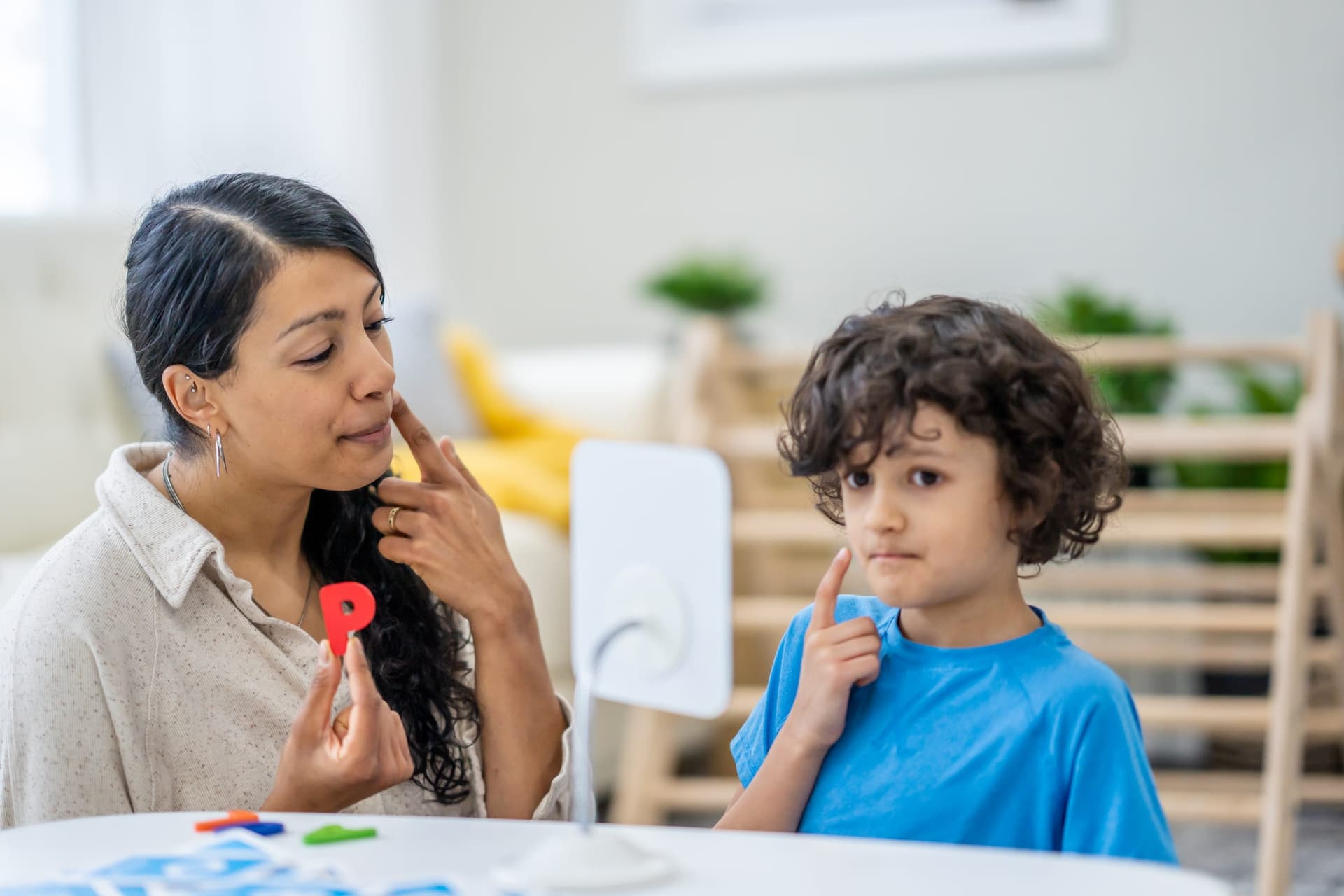
If your child has recently been diagnosed with autism spectrum disorder, or if you are exploring treatment options for developmental or behavioral concerns, you have almost certainly encountered the term "ABA therapy." It appears in pediatrician recommendations, school IEP meetings, insurance documents, and parent forums. But what does it actually mean, and more importantly, what does it look like in practice for your child and your family?
This guide breaks down the essentials of Applied Behavior Analysis in plain language, so you can make informed decisions about your child's care from day one.
When you are ready to talk to providers, see our list of questions to ask an ABA therapist before your child starts.
The science behind ABA
Applied Behavior Analysis is a scientific discipline that studies how behavior works: specifically, how behavior is shaped by what happens in a person's environment. It is not a single technique but a broad framework grounded in decades of research across psychology, education, and behavioral science.
ABA therapy is endorsed by the U.S. Surgeon General, the American Academy of Pediatrics, the American Psychological Association, and the Centers for Disease Control and Prevention as the most effective evidence-based treatment for autism spectrum disorder. It is the only behavioral treatment for autism that has met the scientific standards required by these organizations.
At its core, ABA operates on a principle called reinforcement: behavior that is followed by a positive outcome is more likely to happen again. When a child learns that saying "juice" results in getting juice, they are far more likely to use that word again. This sounds simple, but the clinical application of this principle, across hundreds of skills and thousands of learning opportunities, is what produces meaningful change.
Modern ABA versus historical ABA
It is worth addressing a concern that many parents bring up: they have read or heard about older, more rigid forms of ABA that involved extended hours at a table, repetitive drills, and limited attention to a child's interests. This is a fair concern, and the field has changed substantially.
Modern ABA practice is naturalistic, play-based, and child-led. BCBAs today design programs that meet children where they are: on the floor, in the backyard, at the grocery store, and in the classroom. Goals are chosen in collaboration with families and center on skills that are genuinely meaningful to the child's daily life: communicating, making friends, managing emotions, and gaining independence.
If a program you encounter looks like drills delivered to an unengaged child, that is a clinical quality problem, not a feature of ABA itself. Quality ABA looks like engaged, motivated children working on meaningful goals with a therapist who knows them well.
What a typical session looks like
Most in-home ABA sessions are delivered by a Registered Behavior Technician (RBT): a trained therapist supervised by a Board Certified Behavior Analyst (BCBA). Sessions typically last two to three hours and take place several times per week, though frequency depends on the child's treatment plan and insurance authorization.
During a session, the RBT works through activities designed to target specific skills. These might include a manding activity (teaching the child to request preferred items using words, signs, or a communication device), a play-based social skills sequence, a discrete trial teaching block for a new concept, or a natural environment teaching activity that embeds learning into a game or routine.
The RBT records data on every learning opportunity, whether the child responded correctly, needed a prompt, or did not respond. This data is reviewed by the supervising BCBA, who uses it to adjust the program on an ongoing basis.
What skills ABA addresses
ABA is not limited to one domain. A well-designed ABA program addresses the full range of skills relevant to a child's daily functioning. Common goal areas include: communication and language (requesting, labeling, conversational skills), social interaction (turn-taking, joint attention, peer play), adaptive living skills (dressing, grooming, toileting, mealtime), academic readiness (attending, imitation, matching, early literacy and numeracy), and behavior reduction (replacing challenging behaviors with functionally equivalent, socially appropriate alternatives).
Goals are individualized. A child who is non-verbal will have a very different program than a child who is verbal but struggles with social pragmatics. The BCBA's assessment determines where to focus first and how to sequence skill acquisition for maximum impact.
How progress is measured
One of ABA's defining features is continuous data collection. Unlike approaches that rely on clinical impressions or periodic assessments, ABA tracks every response across every session. This data is graphed and reviewed regularly, allowing the BCBA to make evidence-based decisions about when to advance a skill, when to change teaching strategies, and whether a goal is being generalized across settings.
Parents receive progress reports, typically monthly or quarterly, summarizing their child's gains across all active goals. Many ABA practices, including Spectrum Analytics, share session data in real time through a clinical platform, so families always have visibility into what is happening in each session.
The family's role in ABA
Effective ABA therapy does not happen only during scheduled sessions. The BCBA will train parents and caregivers to use ABA strategies throughout the day: during meals, transitions, playtime, and bedtime routines. This parent training component is essential. Research consistently shows that children whose families actively implement strategies at home make significantly faster progress than those receiving clinic-only services.
This is not about adding stress to an already demanding schedule. It is about embedding learning into activities you are already doing. The BCBA will teach you specific, practical techniques that fit your family's routines and communication style.
How long does ABA therapy last?
There is no universal answer to this question. The intensity and duration of ABA therapy depend on the child's needs, the goals of treatment, and the rate of progress. Research on early intensive behavioral intervention (EIBI), typically 25 to 40 hours per week for children under five, shows the strongest long-term outcomes. However, not every child requires this level of intensity, and many children make substantial gains with fewer hours.
ABA is designed to work toward its own conclusion. The ultimate goal is not lifelong therapy. It is equipping the child with skills that allow them to function, learn, and connect with others with as much independence as possible. Progress is reviewed regularly, and intensity is adjusted as goals are achieved.
Getting started with ABA services
If you believe your child may benefit from ABA therapy, the first step is obtaining a formal autism diagnosis from a licensed psychologist, developmental pediatrician, or psychiatrist. Most insurance plans require this diagnosis before authorizing ABA services.
Once you have a diagnosis, contact a BCBA-led ABA practice in your area to begin the intake process. At Spectrum Analytics, we guide families through every step: insurance verification, intake assessment, treatment planning, and RBT matching. Our initial consultation is free and carries no commitment.